
Essential Corporate Transformation Strategy Guidelines for Effective Corporate Change Management

Navigating the complex landscape of organizational change requires more than just good intentions. It demands a clear, actionable plan that aligns leadership, culture, and execution. With over 25 years of leadership and operational experience, I have witnessed firsthand how a well-crafted corporate transformation strategy can propel organizations to new heights. Today, I want to share essential guidelines that will empower you to lead change confidently and effectively.
Embracing Corporate Change Management: The Foundation of Transformation
Corporate change management is the backbone of any successful transformation effort. It involves preparing, supporting, and helping individuals, teams, and organizations in making organizational change. Without a solid change management approach, even the best strategies can falter.
To build a strong foundation, start by engaging leadership at every level. Leaders must embody the change they want to see. This means clear communication of the vision, consistent messaging, and visible commitment. When leaders are aligned and actively involved, it creates a ripple effect that motivates the entire organization.
Next, focus on building a culture that embraces change. This requires fostering trust, encouraging open dialogue, and recognizing the emotional impact of change. People need to feel safe to express concerns and contribute ideas. Use workshops, team-building exercises, and coaching sessions to cultivate this environment.
Finally, integrate technology and innovation thoughtfully. AI-powered tools and data analytics can provide insights into employee engagement, identify resistance points, and track progress. Leveraging these resources enhances your ability to adapt and respond quickly.
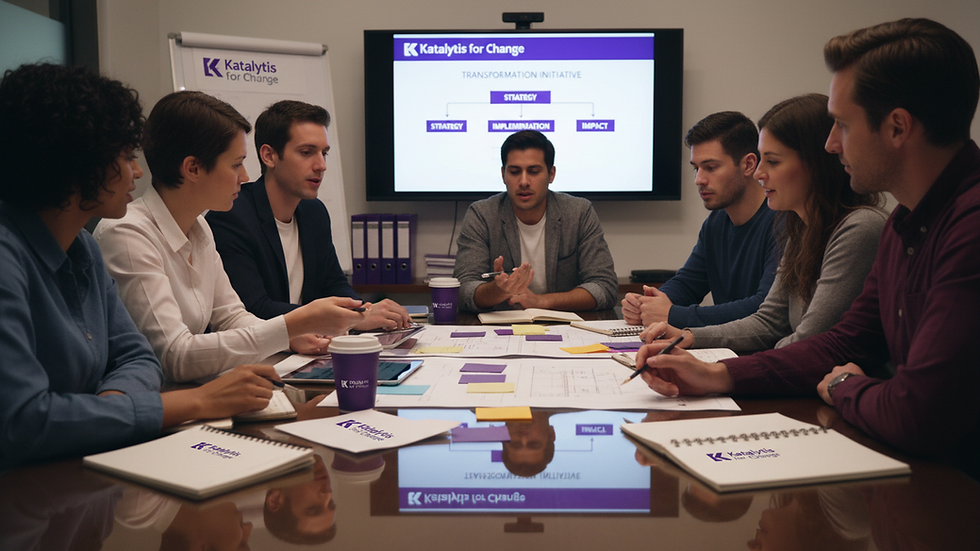
Crafting a Clear Vision and Strategic Roadmap
A compelling vision is the North Star that guides every step of your transformation journey. It must be clear, inspiring, and aligned with your organization's core values. When people understand the "why" behind the change, they are more likely to commit fully.
To translate vision into action, develop a strategic roadmap that outlines:
Key objectives and milestones - Define what success looks like at each stage.
Roles and responsibilities - Clarify who is accountable for what.
Resources and capabilities - Identify what tools, skills, and support are needed.
Communication plan - Ensure consistent, transparent updates.
Risk management - Anticipate challenges and prepare contingency plans.
For example, when working with a healthcare organization, we mapped out a phased approach to digital transformation. This included training programs for staff, pilot testing new systems, and feedback loops to refine processes. The result was a smoother transition and measurable improvements in patient care.
Remember, a strategic roadmap is a living document. Regularly review and adjust it based on feedback and changing circumstances.
What are the 3 C's of strategy?
Understanding the 3 C's of strategy is crucial for effective corporate transformation. These are Customers, Competitors, and Capabilities.
Customers: Know who your customers are, what they value, and how their needs evolve. This insight drives relevant and customer-centric change.
Competitors: Analyze your competitive landscape. What are others doing? How can you differentiate and innovate?
Capabilities: Assess your internal strengths and weaknesses. What resources, skills, and technologies do you have? What gaps must be addressed?
By balancing these three elements, you create a strategy that is both realistic and ambitious. For instance, a nonprofit organization I worked with used this framework to pivot their service delivery model, focusing on underserved communities while leveraging new digital platforms.
Engaging and Empowering Your Workforce
Transformation is not just a top-down process. It thrives when every individual feels involved and empowered. Here’s how to foster engagement:
Communicate frequently and transparently: Share progress, celebrate wins, and acknowledge setbacks.
Provide training and development: Equip your team with the skills needed to succeed in the new environment.
Encourage feedback and participation: Create forums for dialogue and idea sharing.
Recognize and reward adaptability: Highlight stories of individuals and teams who embrace change.

Measuring Success and Sustaining Momentum
Transformation is a journey, not a destination. To ensure lasting impact, establish clear metrics and continuously monitor progress. Key performance indicators (KPIs) might include:
Employee engagement scores
Customer satisfaction ratings
Operational efficiency improvements
Financial performance metrics
Innovation adoption rates
Use data to celebrate milestones and identify areas needing adjustment. Regular check-ins with leadership and teams keep everyone aligned and motivated.
Sustaining momentum also means embedding change into your organizational DNA. This involves:
Reinforcing new behaviors through policies and incentives
Continuing leadership development and coaching
Encouraging a culture of continuous improvement
By doing so, you create an agile organization ready to face future challenges with confidence.
Moving Forward with Confidence and Clarity
Leading transformation requires courage, clarity, and commitment. By following these essential guidelines, you position your organization to thrive amid change. Remember, successful transformation is a blend of strategic planning, cultural alignment, and empowered people.
As a John Maxwell Certified Coach and True Colors Certified Facilitator, I have seen how integrating human insight with AI-powered coaching can accelerate leadership growth and organizational success. Together, we can flip the flow of change from uncertainty to opportunity.
For those ready to take the next step, consider how a tailored corporate transformation strategy can unlock your organization’s full potential. The future belongs to those who lead with vision, engage with heart, and execute with precision.
Let’s embrace change as a catalyst for growth and lasting impact.
If you want to explore more about leadership transformation and strategic execution, stay tuned for upcoming workshops and AI-powered solutions designed to elevate your organization.


Comments